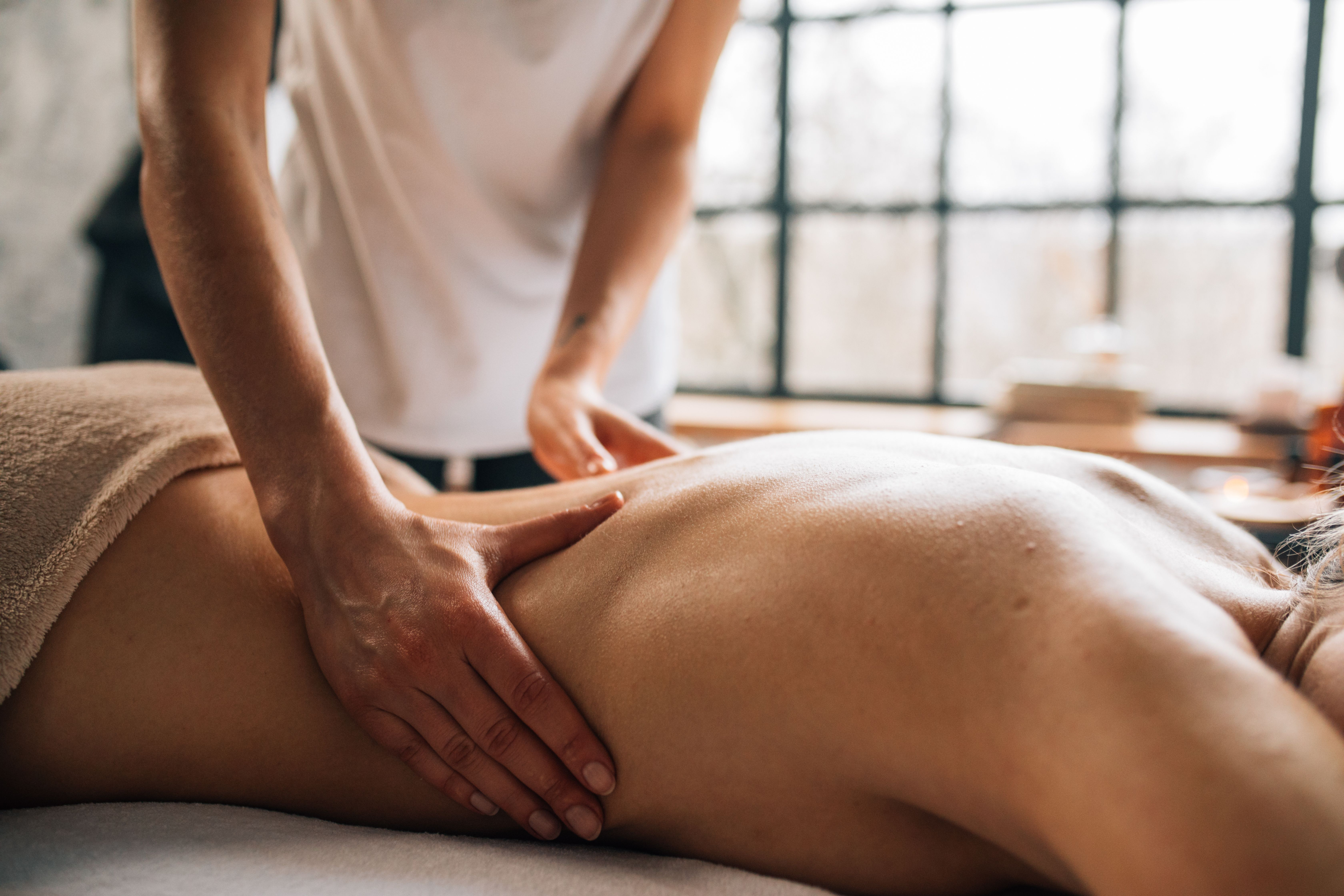
Most people who come in with shoulder pain have not injured anything. They have simply held one position for forty hours a week and their body has adapted to it.
Why it is always the same shoulder
If you sit at a desk, your upper back spends most of the day in a slightly rounded position while your head sits forward of your shoulders. The muscles across the top of your shoulders end up holding the weight of your head at an angle they were never meant to hold it at, for hours at a time, without a break.
They do not complain immediately. They complain on Thursday, once the load has stacked up across four days, which is why so many people describe the ache as arriving late in the week and easing off over the weekend.
What is actually happening in the muscle
Muscle that is held under low-level tension for long periods gets less blood flow than muscle that contracts and relaxes. Less blood flow means waste products hang around, the tissue becomes more sensitive, and what started as mild stiffness becomes something you notice all day.
That is why stretching alone often gives you twenty minutes of relief and no more. The stretch changes how the muscle feels without changing what put it there.
Two things worth trying this week
The first is to break up the position rather than improve it. Standing up every forty minutes does more for a stiff neck than any amount of sitting up straight, because the problem is the duration rather than the posture itself.
The second is to give the muscles across your upper back something to do. Two minutes of gentle shoulder blade squeezes, a few times a day, is enough to restore some blood flow and interrupt the pattern before it settles in.
When it is worth booking in
If the ache has been coming back for more than a few weeks, or if it has started travelling into your neck or down your arm, hands-on work will get you further than self-management on its own. A sports massage will release what has already tightened, and you will leave with a plan for keeping it that way.